
Core service
Carpet to Hardwood Stairs: Cost, Timeline and Options
By Lucas Souza, Perfectum Floors
Published October 14, 2026
The short answer
Converting carpeted stairs to hardwood means removing the carpet and fitting solid or engineered treads and risers to each step. Cost is driven by the number of steps, open versus closed sides, railing work and matching wood — not by square footage. Most single flights are a multi-day job.
Carpeted stairs to hardwood is one of the most noticeable upgrades you can make — it is the first thing people see and touch when they walk in. It is also, square foot for square foot, one of the most labor-intensive flooring jobs there is. Here is what the project actually involves, how long it takes, and why the price per step runs high.
What are my options for converting carpeted stairs?
There are two main paths. The common one is to remove the carpet and install new solid or engineered treads and risers cut to fit each step. This gives you a true hardwood staircase that can match or complement the floors around it.
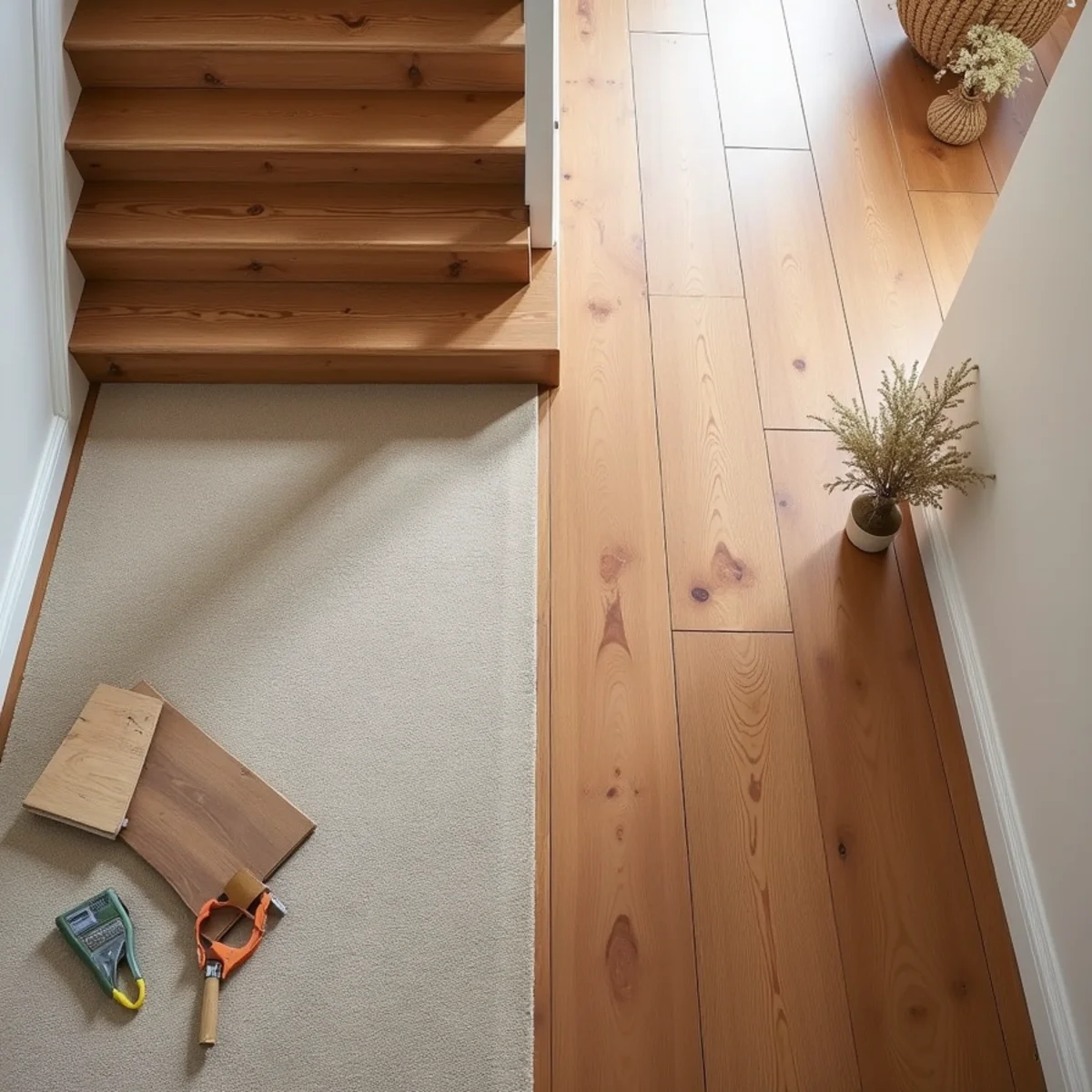
The other path is retreading — capping the existing rough stair framing with prefinished tread and riser covers. It can work when the underlying stringers are sound and square. A third choice is a runner: hardwood on the sides with a carpet strip down the center, which adds grip and softens the look. Which one fits depends on what is under that carpet, and you will not know until it comes up.
Treads also come prefinished or ready to stain on site. Prefinished treads arrive sanded and coated, which shortens the job and cuts the finish smell in the house. Site-finished treads let you match an existing floor’s stain exactly, at the cost of extra days for staining and curing. Speed versus a perfect match is the trade-off.
Thinking about pulling the carpet off your stairs? We remove a section, inspect the stringers and subtreads, and give you a written quote with the real options for your staircase. Call (904) 533-7260.
Call (904) 533-7260
What drives the cost of hardwood stairs?
Not square footage — stairs are priced by the step and the detail, because almost every piece is cut and fit individually. These are the levers that move the number.
| Cost driver | Lower end | Higher end |
|---|---|---|
| Number of steps | A short single flight | Two flights plus a landing |
| Stringer type | Closed — walls on both sides | Open side needs finished returns |
| Treads & risers | Paint-grade risers | Stain-grade risers to match treads |
| Railing & balusters | Reuse the existing rail | Rebuild or refinish the rail system |
| Matching wood | Stock oak treads | Custom species and stain to match the floor |
An open staircase — one with a finished, exposed side — costs more than a closed one boxed between two walls, because each tread needs a finished, mitered return on the open end. That detail is slow, skilled work, and it is a big reason two staircases with the same step count can quote very differently.
Matching an existing hardwood floor is the other big swing. Stock oak treads in a standard stain are the economical path. Matching an unusual species, a custom stain, or an older floor’s aged color means more product cost and more finishing labor to blend the stairs into what is already down.
How long does a staircase take?
Plan on a multi-day project for a typical single flight, and longer for stained finishes. The carpet comes off quickly, but fitting and finishing each step is slow, and finish coats need time to cure between applications.
During that window the stairs are at least partly out of service, which matters in a two-story home. A good installer sequences the work so you keep safe access, but expect some disruption — this is not a floor you can walk on the hour it goes down.
Is this a DIY project?
It can be, but stairs are the least forgiving place to learn. Each tread must be cut to a tight fit, the nosing overhang has to stay consistent, and the geometry has to be safe underfoot. Mistakes here are not cosmetic — an uneven tread or a loose step is a fall risk the whole family lives with.
Retread cap kits are sold for the DIY route, and they can work on sound, square framing. But open sides, railing work and matching an existing floor move the job quickly past weekend-project territory. If the staircase is the first thing guests see, it is usually worth doing right once rather than twice.
What does the conversion process look like?
Every staircase is a little different, but the sequence is consistent. This is the path from carpeted to finished hardwood.
- 1
Strip the carpet
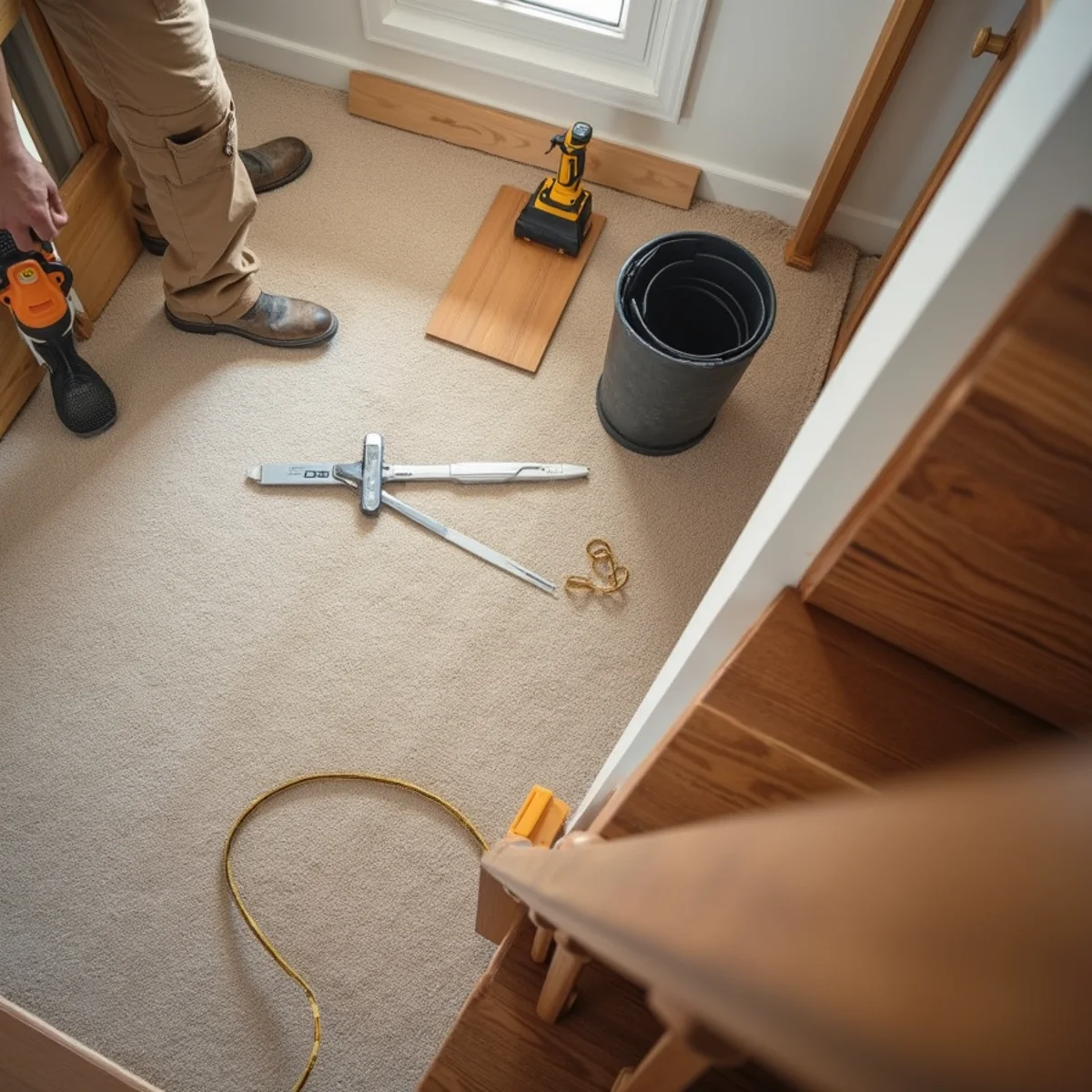
Remove the carpet, pad, every staple, and the tack strip from treads and risers.
- 2
Inspect the framing
Check the stringers and subtreads for squeaks, movement and damage, and repair what the carpet was hiding.
- 3
Measure and cut to fit
Template and cut treads and risers for each step individually — stairs are rarely perfectly uniform.
- 4
Install treads and risers
Set and fasten each piece, with a proper nosing overhang and finished returns on any open side.
- 5
Handle the railing
Reuse, refinish or rebuild the rail and balusters so they suit the new hardwood.
- 6
Finish and cure
Stain if needed, apply the protective coats, and let them cure before the stairs take full traffic.
Stairs are the one floor you can fall down
Safety is not a place to cut corners on a staircase. Consistent tread depth, a proper nosing overhang, and a finish with enough grip matter more here than anywhere else in the house. A loose retread kit or a slick, over-glossed finish can turn a beautiful staircase into a hazard. Get the geometry and the grip right first, looks second.
Should the stairs match my floors?
They should relate to your floors, but they do not have to match perfectly. Before you commit to a look, think through these points — they affect both the result and the cost.
- Will the treads match your existing hardwood species and stain, or intentionally contrast?
- Is the staircase open on one side and in need of finished returns?
- Do you want stain-grade risers to match, or cleaner, cheaper painted white risers?
- Does the existing railing stay, get refinished, or get replaced?
- Is there a landing or a turn that adds steps and detail work?
- Do you need the stairs usable each evening during the install?
A popular, budget-friendly look pairs stained treads with crisp white risers, which saves on matching while still reading as a finished staircase. Matching everything to an existing floor costs more but gives a continuous, custom result.
The bottom line on carpet-to-hardwood stairs
This is a high-impact upgrade and a labor-heavy one, which is why it is priced by the step and the detail rather than by square footage. Your real options only become clear once the carpet is off and the framing is inspected. Budget for a multi-day job, put safety and solid geometry ahead of the finish, and you get a staircase in Madison or Owens Cross Roads that lifts the whole entry for years.
FAQ
Frequently asked questions
Services
Related flooring services
Service areas