
Core service
Can You Install LVP Over Tile or Old Hardwood?
By Lucas Souza, Perfectum Floors
Published October 14, 2026

The short answer
Often yes. Rigid-core LVP can float over existing tile or hardwood when the old floor is firmly attached, flat, clean and dry. It fails when the surface is loose, badly uneven, holding moisture, or when the added height blocks doors and appliances. Prep decides whether it lasts.
Going over the old floor instead of tearing it out can save real time and money. Luxury vinyl plank is built for it — rigid-core LVP floats as one connected surface and does not need to be glued to what is underneath. But "can you" and "should you" are different questions, and the answer comes down to the condition of the floor you already have.
Can LVP go over existing tile?
Usually, yes, if the tile is solid. The whole tile field needs to be firmly stuck down with no loose, hollow or cracked pieces, because LVP only performs over a stable base. Tap around — a hollow sound means a tile has let go, and that spot has to be re-bedded or filled first.
The catch with tile is the grout lines. Deep or wide grout joints can telegraph through thinner vinyl over time, showing as faint lines on the new floor. The fix is a skim coat or embossing leveler to bring the grout lines up flush before the plank goes down.
Height is the other tile question. Tile plus LVP can lift the floor enough to matter at a doorway, a sliding-glass track, or where tile meets carpet. Measure those transitions before you commit, because a raised threshold you trip on is a daily reminder of a shortcut that looked fine on paper.
Wondering if your tile or hardwood is a good candidate for a floor-over install? We check flatness, bond and moisture before we quote, so you know whether to go over it or pull it. Call (904) 533-7260.
Call (904) 533-7260
Can LVP go over old hardwood?
Often, but hardwood has its own checklist. The boards must be fastened down tight with no squeaks or movement, and the surface has to be reasonably flat. Screw down any loose boards and silence squeaks before a single plank is laid — once the LVP is on, you cannot reach them.
Cupped, crowned or water-damaged hardwood is a different story. If the boards are not flat, the LVP will follow every high and low and may flex or separate at the joints. A badly cupped floor needs to be flattened or removed first — you cannot hide a moving subfloor under a floating one.
What about over laminate, sheet vinyl or a cushioned floor?
Over old laminate or sheet vinyl, LVP can often float just fine if the surface is flat, stuck down and dry. The deal-breaker is softness. A cushioned vinyl, or any floor with a spongy backing, flexes under the rigid plank, and that constant flex works the locking joints loose over time.
The rule is simple: rigid plank wants a firm, flat base. Hard, flat and fixed in place is a candidate to go over. Soft, loose or wavy is not, no matter what the material underneath happens to be. When in doubt, press down with your foot — if the floor gives, so will the LVP on top of it.
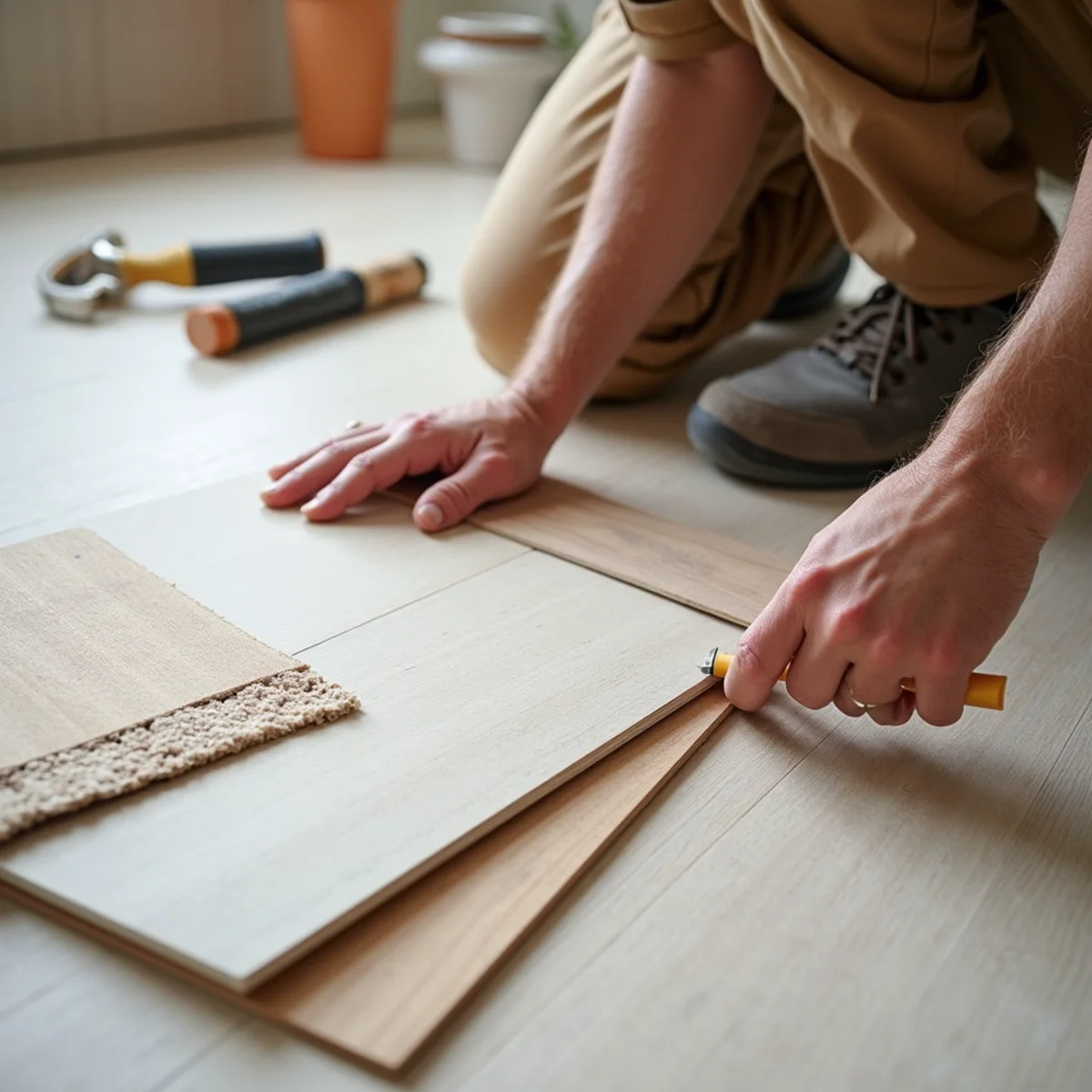
When should the old floor come out instead?
Some floors are not worth going over, and recognizing them up front saves a callback later. Pull the old floor when any of these are true.
- The tile is loose, hollow-sounding or cracked across the field
- The hardwood is cupped, buckled or has soft, water-damaged spots
- There’s any sign of moisture or a past leak in the subfloor
- The floor is too far out of flat to level economically
- The added height would block doors, trap appliances, or create a trip edge
- There’s a cushioned or soft layer underneath that won’t support rigid plank
That last point on height is the one people forget. Every layer you leave in place raises the finished floor, and a dishwasher boxed in under a counter or a door that no longer clears the floor turns a quick job into a problem.
Here is the quick read on the floors we see most often in Moores Mill and Athens homes, and whether they are usually worth going over.
| Existing floor | Usually a candidate? | The deciding factor |
|---|---|---|
| Sound ceramic or porcelain tile | Yes | Fill the grout lines; confirm no loose or hollow tiles |
| Firmly nailed, flat hardwood | Yes | Screw down squeaks; it must be flat and dry |
| Sheet vinyl or laminate (glued, flat) | Often | Must be hard, flat and stuck down — not cushioned |
| Cushioned or spongy vinyl | No | Flex works the locking joints loose over time |
| Cupped, buckled or water-damaged wood | No | Flatten or remove, and fix the moisture source first |
What prep makes a floor-over installation last?
The install itself is fast. The prep is what separates a floor that lasts from one that telegraphs and fails. Work through these in order.
- 1
Check flatness
Most LVP wants the subfloor flat within about 3/16 inch over 10 feet. Find the high and low spots with a straightedge before anything else.
- 2
Fill the grout lines or level
Skim-coat deep tile grout joints and feather out low areas so the surface reads as one flat plane.
- 3
Lock down movement
Screw loose boards, kill squeaks, and re-bed any loose tile — nothing under the floor should move.
- 4
Check for moisture
Over a slab or a suspect subfloor, test for moisture before committing. A floating floor does not stop water from below.
- 5
Clean thoroughly
Sweep and vacuum every particle; grit trapped under rigid plank becomes a lump you will feel underfoot.
- 6
Plan the transitions
Undercut door jambs, set thresholds, and confirm appliance and door clearance for the new, higher floor.
Flatness is the quiet dealbreaker
LVP is thin and flexible, so it conforms to whatever is beneath it. It hides small cosmetic flaws but not shape — a dip, a crown or a proud grout line will come through, and over time the planks can flex at the joints and separate. When in doubt, spend the prep money on leveling. It is the cheapest insurance on a floating floor.
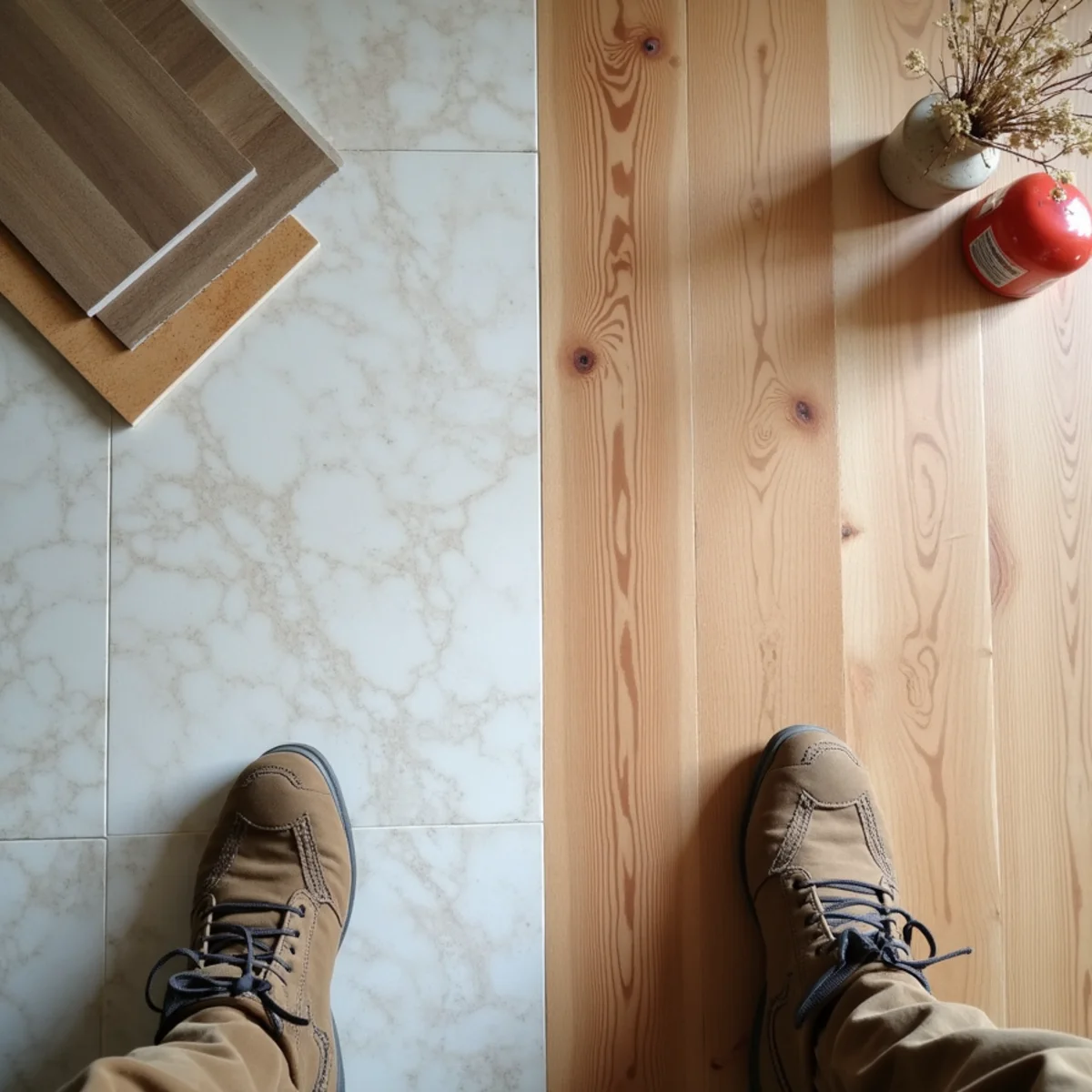
Does going over the old floor affect the warranty?
It can, so read the plank manufacturer’s instructions before you decide. Many LVP warranties spell out what you can install over and what prep is required — a flatness tolerance, a moisture limit, approved substrates. Installing over a surface the maker excludes can void the product warranty even if the floor seems to perform fine.
This is one more reason the prep is not optional. Meeting the flatness and moisture specs is both what makes the floor last and what keeps the warranty intact. Keep the product documentation with your records, so if a claim ever comes up you can show the install followed the rules.
The bottom line on installing LVP over tile or hardwood
Going over the old floor is a legitimate, money-saving move around Moores Mill and Athens — when the existing floor is firmly attached, flat, dry, and the added height works for your doors and appliances. When it is loose, cupped, damp or badly uneven, the honest answer is to pull it. A quick flatness and moisture check before you buy a single plank tells you which floor you have, and that one check is what makes the new floor last.
FAQ
Frequently asked questions
Services
Related flooring services
Service areas